Losing a tooth affects far more than your smile. It changes the way you chew, the way you speak, and over time even the shape of your face as the jawbone beneath the gap slowly shrinks. Dental implants are the only tooth replacement that restores the tooth from the root up, which is why they have become the gold standard of modern dentistry.
Implant dentistry is the heart of our practice at DMall Dental Care. Our implant specialist has placed implants for patients across Ranchi and Jharkhand, from a single missing tooth to complete full-mouth rehabilitation. Here is everything you need to know before you begin.
What is a dental implant?
A dental implant is a small, screw-shaped post made of medical-grade titanium (or zirconia) that is placed into the jawbone where the natural root used to be. Over the following weeks, the bone grows tightly around the implant surface in a process called osseointegration, locking it in place just like a natural root.
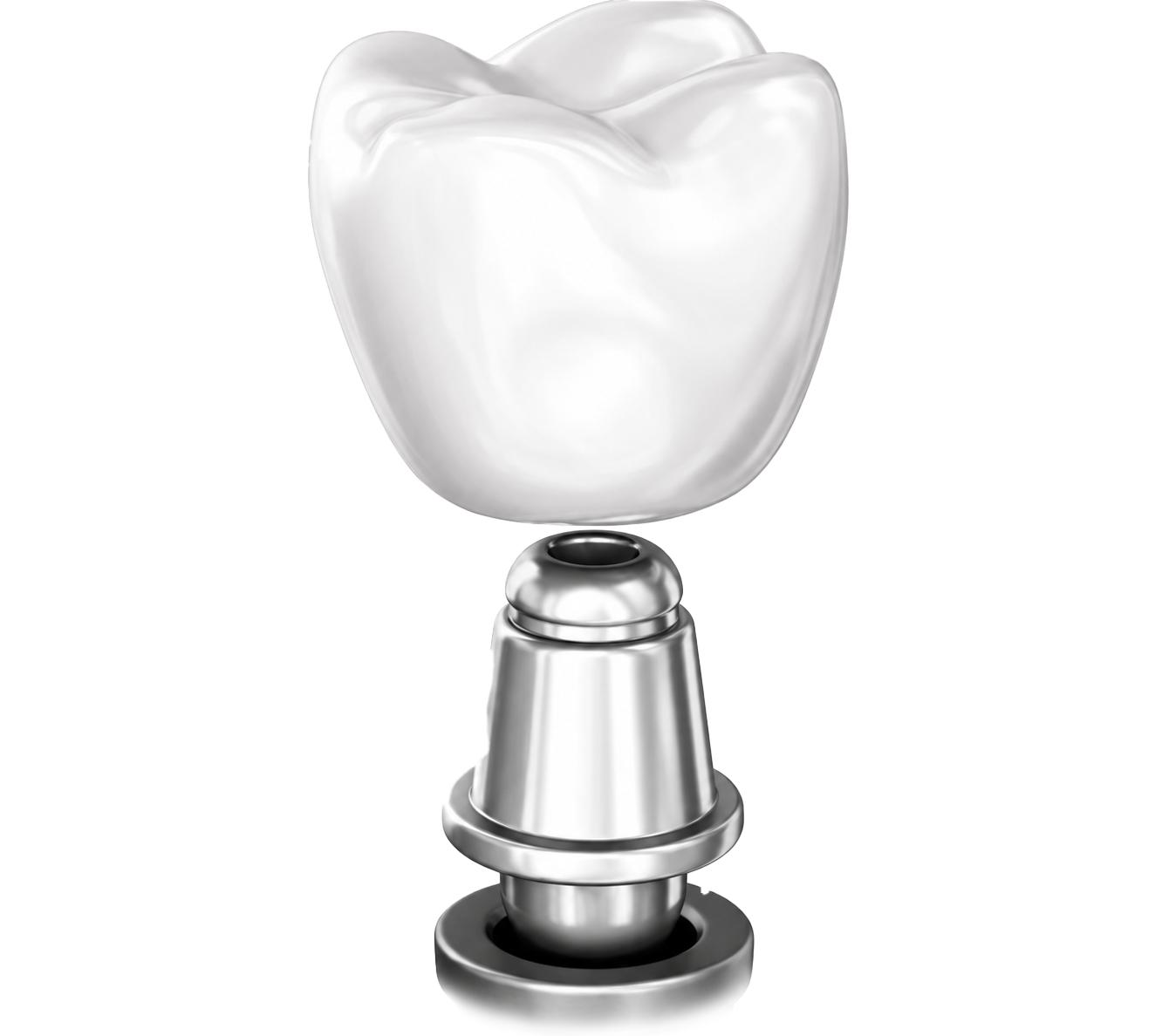
Once the implant has fused with the bone, a connector called an abutment is attached, and a custom-made crown is fixed on top. The result is a tooth that looks, feels, and functions like your own, with no clasps, no adhesives, and nothing to remove at night.
Types of implant treatment we offer
Every mouth is different, so we plan each case individually after a 3D scan. The most common options are:
- ✓Single tooth implant: one implant and one crown to replace one missing tooth without touching the neighbouring teeth.
- ✓Implant-supported bridge: two or more implants carrying a bridge to replace several missing teeth in a row.
- ✓All-on-4 / All-on-6: a full arch of fixed teeth supported on just four or six implants, ideal for patients who have lost most or all of their teeth.
- ✓Implant-supported overdenture: a removable denture that clicks firmly onto implants, so it never slips while eating or talking.
- ✓Immediate implants: in selected cases, the implant is placed on the same day the tooth is removed, reducing the total number of surgeries.
Are you a good candidate?
Most healthy adults with a missing tooth can receive an implant. What matters most is the quality and quantity of bone available, and the health of your gums. Age alone is rarely a barrier; we routinely treat patients in their 60s and 70s.
Conditions like diabetes or a history of smoking do not automatically rule you out, but they need to be well controlled. If bone has been lost, procedures such as bone grafting or a sinus lift can rebuild the site so that an implant can be placed safely.
- ✓You have one or more missing teeth, or a tooth that cannot be saved
- ✓You are tired of a loose or uncomfortable denture
- ✓You do not want neighbouring healthy teeth cut down for a bridge
- ✓Your gums are healthy, or can be treated before surgery
Why implants are worth it
Compared with bridges and dentures, implants offer benefits that last for decades:
- ✓Preserve the jawbone and prevent the sunken look that follows tooth loss
- ✓Chew anything comfortably, with biting force close to natural teeth
- ✓No need to grind down healthy adjacent teeth
- ✓Look completely natural; nobody will know which tooth is the implant
- ✓Very high long-term success rate when placed and maintained properly
Recovery and aftercare
Most patients are surprised at how comfortable implant surgery is. Any soreness after the procedure is usually mild and managed with regular painkillers for two to three days. Stick to soft food for the first week and avoid smoking, as it slows healing.
An implant cannot decay, but the gum around it can become inflamed if plaque builds up. Brush twice daily, clean between the teeth with floss or an interdental brush, and visit us for a check-up and professional cleaning every six months.
Step-by-step procedure
- 1
Consultation & 3D scan
We examine your mouth, take a CBCT 3D scan to measure bone, and discuss the options and a clear treatment plan.
- 2
Implant placement
Under local anaesthesia, the implant is gently placed in the jawbone. Most single implants take under an hour.
- 3
Healing (osseointegration)
Over 8 to 12 weeks the bone fuses with the implant. A temporary tooth can be provided so you are never without a smile.
- 4
Abutment & impressions
The connector is attached and precise digital impressions are taken to design your final crown.
- 5
Final crown
Your custom crown, colour-matched to your natural teeth, is fixed in place. You leave with a complete, permanent tooth.
Frequently asked questions
Does getting an implant hurt?
The procedure is done under local anaesthesia, so you will feel pressure but no pain. Most patients say it was easier than having a tooth extracted.
How long do dental implants last?
The implant itself can last a lifetime with good oral hygiene and regular check-ups. The crown on top may need replacing after 15 to 20 years due to normal wear.
What if I don't have enough bone?
Bone grafting or a sinus lift can rebuild lost bone. In many cases this can be done at the same time as implant placement.
Can I get teeth on the same day?
In suitable cases, immediate loading allows a temporary fixed tooth or full arch to be attached on the day of surgery. We will tell you after the 3D scan whether this is possible for you.
Is an implant better than a bridge?
A bridge requires cutting down healthy neighbouring teeth and does not stop bone loss. An implant stands on its own and protects the bone, which is why it is usually the better long-term choice.
At DMall Dental Care, we take pride in our patient-centered approach, using cutting-edge technology to ensure precise and pain-free treatments. We're dedicated to helping you achieve and maintain a beautiful, healthy smile that lasts a lifetime.